
What People Mean When They Say “Epstein Files”
When people talk about the Epstein Files, they usually mean the collection of court records, legal filings, exhibits, investigative material, and associated documents that emerged from legal cases involving Jeffrey Epstein.
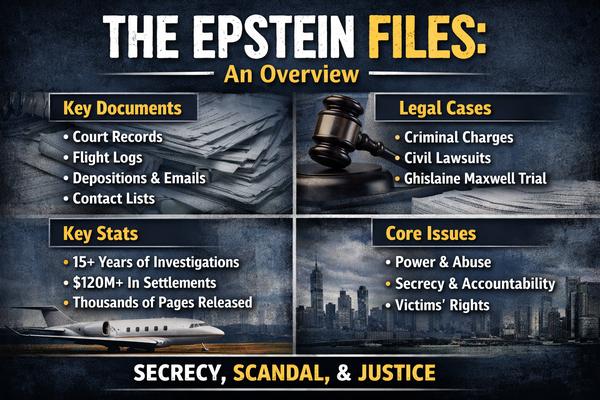
The phrase sounds mysterious like some secret archive with hidden truths. In reality, the Epstein Files represent legal documents produced in civil lawsuits, criminal investigations, and public disclosure orders. These files include things like sworn testimony, deposition transcripts, contact logs, flight records, emails entered as exhibits, court rulings, and other materials submitted in litigation.
People on social media and in public debates often refer to these materials collectively as “the Epstein Files,” though that term has no official legal meaning. Instead, the files are better understood as the publicly released results of litigation and discovery piecemeal, heavily redacted, and shaped by legal rules.
Understanding what was released, why it was released, and what it actually contains requires attention to how the U.S. legal system handles these matters. Everything about the Epstein Files is rooted in process, privacy, and law not in a singular “secret document drop.”
How Epstein Files Came Into Existence
The Epstein Files did not appear out of nowhere. They grew out of multiple legal processes spanning many years.
Criminal Investigations and Federal Prosecutions
Jeffrey Epstein came under scrutiny by investigators in Florida in the mid-2000s. Those early investigations led to a plea deal in 2008 that drew criticism later for its leniency. More than a decade later, in 2019, Epstein faced federal criminal charges in New York.
The investigative files from those cases include:
-
Interviews conducted by law enforcement
-
Evidence collected during search and seizure
-
Prosecutorial filings
-
Grand jury materials (mostly sealed)
Most of this material remained sealed because the law generally protects investigative files to avoid compromising ongoing inquiries, jeopardizing witness safety, or harming privacy.
Civil Litigation
Civil lawsuits filed by individuals who brought claims against Epstein and associated parties produced a lot of documentation. In civil cases, lawyers exchange evidence in a process called discovery. That evidence can include:
-
Sworn witness statements
-
Emails and written communications
-
Transaction records
-
Logs of travel or contact
In civil litigation, judges decide what material enters the court record and what remains private. Much of the material that people now refer to as the Epstein Files comes from these civil cases not from criminal prosecutors.
Legal Motions for Public Access
Media organizations and victims’ attorneys filed motions asking judges to make certain materials public. Courts frequently must balance:
-
The public’s right to know
-
Individual privacy rights
-
Safety of witnesses and unrelated people
-
Fairness to people mentioned in the documents
The result has been piecemeal release, not one big “dump.” Judges released materials in phases, often heavily redacted.
Ghislaine Maxwell and Expansion of the Files
A major part of the Epstein Files emerged during and after the trial of Ghislaine Maxwell. Maxwell faced federal charges and was convicted on multiple counts related to her association with Epstein.
Her trial created thousands of pages of exhibits including emails, witness testimony transcripts, sworn statements, and other evidence. Those materials entered the court record.
Maxwell’s lawyers and prosecutors submitted documents as part of trial preparation and argument. Many of those materials later became part of the public docket or were used in subsequent civil proceedings.
The release of Maxwell trial materials significantly expanded the volume of documents people think of as the Epstein Files.
What the Released Documents Actually Contain
A frequent misconception is that the Epstein Files are an organized set of revelations waiting to be unpacked. The reality looks different.
The released material includes:
Sworn Testimony
Witnesses provided sworn testimony in civil cases or in depositions. These transcripts capture what someone says under oath, but they do not equate to proven facts in a legal sense.
A witness might describe a memory, an event, or a conversation. Other witnesses might disagree. Judges and juries consider such testimony in context.
Emails and Correspondence
Some emails entered as exhibits show relationships or communications among parties. Many of these look like ordinary professional correspondence. Without context, a single email rarely proves wrongdoing.
Contact Logs and Address Books
Epstein maintained extensive address books and travel logs, detailing people he knew or communicated with. Courts released some of these records. A name on a contact list or flight log does not mean that individual participated in or knew about criminal activity.
Financial Records
Some financial documents surfaced through civil litigation. These show transactions and accounts. Financial records are complex and often require interpretation from forensic accountants to understand significance.
Court Orders and Judgments
Some materials include court orders explaining why judges made certain decisions about release, redaction, or sealing.
Misinterpretations and Misuse of the Files
The Epstein Files have played a central role in public debate, but they are frequently misunderstood.
A Name Is Not a Conviction
One of the biggest misconceptions is that people whose names appear in the files are necessarily guilty of wrongdoing. The legal and social meanings of association and conviction differ dramatically.
A name in a contact list, travel log, or email does not equal evidence that a person committed a crime or even knew about criminal conduct. Many people who communicated with Epstein did so in routine or professional contexts.
Judges and lawyers have repeatedly pointed out that misinterpretation of raw documents can lead to false conclusions.
Redactions Create Gaps
Courts redact names, locations, and other identifying information for privacy reasons. Those redactions create gaps that can be exploited by speculation or by people who guess what was removed. Such guesses are not evidence.
Media Headlines vs. Legal Reality
Headlines often sensationalize individual documents without explaining their legal context. This confuses public understanding of what the files actually prove and what they do not.
Statistics About the Epstein Files and Related Proceedings
Below is a clear snapshot of key numbers related to the Epstein Files and the legal processes that produced them:
| Metric | Verified Figure | Explanation |
|---|---|---|
| Years of documented investigations | 2005–2019 | Epstein was under investigation at various times by state/federal authorities over more than a decade |
| Major criminal cases involving Epstein | 2 | Florida plea deal (2008) and federal indictment (2019) |
| Major convictions related to the network | 1 | Ghislaine Maxwell convicted in federal court |
| Estimated civil settlements paid by Epstein estate | Over $120 million | Distributed to verified claimants through court-supervised processes |
| Court records publicly released | Thousands of pages | Across multiple civil and criminal dockets |
| Estimated number of plaintiffs in civil suits | Hundreds | Claims brought against Epstein’s estate and associates |
These numbers do not capture the content of the files, but they show the scope and scale of the legal proceedings that generated the documents.
Why Courts Release Materials Slowly
A common question is: Why doesn’t the court just release everything at once?
The answer lies in established legal principles.
Privacy and Protection of Survivors
Many documents involve individuals who have not sought the spotlight or who could face harm if identified publicly. Courts prioritize protecting the privacy and safety of such individuals.
Due Process Rights
The U.S. legal system protects the rights of everyone named in legal documents, including the right not to have unverified allegations published without context. Releasing all material at once could violate those rights.
Ongoing and Related Legal Matters
Some material remains sealed because it relates to ongoing legal matters or could jeopardize other proceedings. Courts are careful not to release anything that might interfere with justice.
How the Public and Media React
The Epstein Files have generated intense public interest and media coverage. Some reporting has been responsible and careful. Other coverage has exaggerated or misstated what documents show.
Important distinctions in media reporting include:
-
Differentiating between allegations and verified facts
-
Explaining why documents were released and under what terms
-
Clarifying what legal procedures mean
Unfortunately, sensationalized reporting often prioritizes attention-grabbing headlines over nuance.
Common Misconceptions Debunked
Here are some of the most frequent misunderstandings about the Epstein Files:
Myth: The Epstein Files Contain a “Smoking Gun”
There is no single document that serves as definitive proof of widespread conspiracy. Rather, the files contain fragments of evidence that must be interpreted in context.
Courts and legal experts emphasize that legal conclusions require rigorous standards of proof.
Myth: Everyone in Epstein’s Circle Knew About Crimes
Many people connected with Epstein had professional or distant associations. Legal systems make strict distinctions between association and culpability.
Myth: All Documents Have Been Released
Many materials remain sealed permanently because of privacy protections or legal restrictions. What has been made public represents only a portion of the total documentation created during litigation.
Why the Epstein Files Still Matter
Despite misunderstandings and misinterpretations, the Epstein Files remain important for several reasons.
Transparency and Accountability
Public access to court records promotes transparency and helps people understand how legal institutions respond to complex cases involving powerful individuals.
Lessons for Institutions
The files show how educational institutions, financial firms, and regulatory authorities interact with individuals under scrutiny. These patterns can inform reforms.
Support for Survivors
The legal recognition of claims and the publication of court outcomes matter to the individuals involved and to broader public understanding of justice.
Broader Legal and Social Context
The Epstein Files also reflect larger themes in the justice system.
The Challenge of Power
High-profile defendants often attract legal resources that ordinary defendants do not. The public debates around Epstein’s plea deals and sentencing illustrate tensions between prosecutorial discretion and public demands for accountability.
Civil vs. Criminal Processes
Civil litigation and criminal prosecution serve different purposes. Civil suits address claims for compensation. Criminal cases seek to establish guilt under law. The Epstein Files draw from both arenas.
Understanding these differences helps clarify why documents exist and how they should be interpreted.
Moving Forward: What to Watch
Future developments related to the Epstein Files may include:
-
Additional court rulings on document releases
-
Scholarly analysis of how courts handle high-profile civil and criminal dockets
-
Journalistic investigations grounded in verified facts
None of these guarantee dramatic revelations, but all contribute to public understanding.
Final Summary
The Epstein Files are not a single secret archive that suddenly cracked open. They represent a complex, legally produced set of court records and documents generated over many years across multiple judicial processes.
These files:
-
Include testimonies, exhibits, contact and travel records
-
Reflect legal procedures that protect privacy and due process
-
Do not equate appearance of a name with guilt
-
Have generated misunderstanding and speculation
What matters most is not the myths surrounding the Epstein Files, but what they reveal about how justice systems operate when power, money, and complex allegations intersect.