
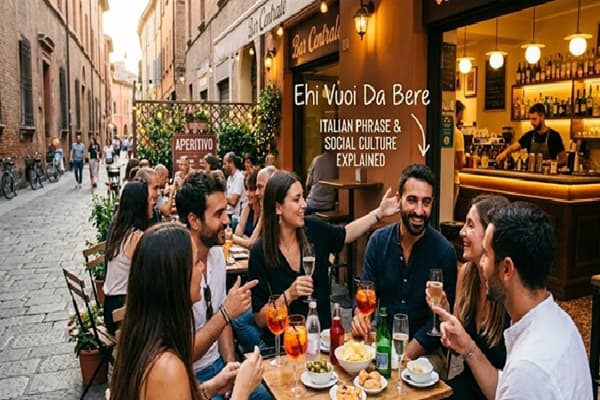
Have you ever been in Italy, chatting with locals at a café, and heard someone say, “Ehi, vuoi da bere?” It might sound simple, but it’s more than just words. It’s a warm, inviting gesture that reflects Italian culture and hospitality in a casual, everyday way.
Contents
- 1 What Does “Ehi Vuoi Da Bere” Mean?
- 2 When and How Italians Use It
- 3 Cultural Significance of Offering a Drink
- 4 How to Respond
- 5 Pronunciation Tips
- 6 Common Variations
- 7 Drinks Italians Usually Offer
- 8 Social Tips
- 9 Why This Phrase Matters for Travelers
- 10 Fun Examples in Daily Life
- 11 Why It’s More Than Just a Drink
- 12 FAQ About “Ehi Vuoi Da Bere?”
- 13 Key Takeaways
- 14 Conclusion
What Does “Ehi Vuoi Da Bere” Mean?
At its core, “Ehi, vuoi da bere?” translates to “Hey, do you want something to drink?” It’s informal and friendly.
-
Ehi – Think of it as “Hey!” to get someone’s attention.
-
Vuoi – Means “do you want?” in a casual sense.
-
Da bere – Literally “to drink,” which could be anything from water to wine.
This simple phrase carries a lot of weight in Italy. It’s a small way to show friendliness and include someone in a social moment.
When and How Italians Use It
Italians love social interactions, and drinks often bring people together. “Ehi, vuoi da bere?” pops up in many everyday situations.
At Home
Imagine visiting an Italian friend’s apartment. They greet you with a smile and immediately ask, “Ehi, vuoi da bere?” Offering a drink is a sign of hospitality. It’s a way to make guests feel comfortable.
At a Café or Bar
Even in a casual café or bar, this phrase works. A barista might say it, or a friend sitting across a small table could offer you a drink. Coffee, juice, or wine it’s all included.
In Social Gatherings
Parties, aperitivos, and casual meet-ups often start with this phrase. It’s an opener for conversation and connection. Saying it is a small gesture that says, “You belong here, let’s enjoy this moment together.”
Cultural Significance of Offering a Drink
Offering someone a drink is a simple act with cultural depth. Italians see it as more than quenching thirst. It’s about:
-
Warmth and Welcome: Shows care and friendliness.
-
Social Connection: Encourages interaction and bonding.
-
Tradition: Part of the hospitality culture that Italians pride themselves on.
Even if you don’t speak fluent Italian, understanding this phrase helps you navigate social settings with ease.
How to Respond
The response depends on whether you want a drink or not. Here’s how you can reply naturally:
-
Sì, grazie! – Yes, thank you!
-
Volentieri! – Gladly!
-
No, grazie. – No, thanks.
Remember, the tone matters. Smile and maintain eye contact. Italians value gestures as much as words.
Pronunciation Tips
Pronouncing Italian phrases correctly can help you connect with locals. Here’s a guide:
-
Ehi – Say it like “ey” in English.
-
Vuoi – Pronounced “vwah-ee.”
-
Da bere – Pronounced “dah beh-reh.”
Practice saying it smoothly in one breath. It sounds friendlier and more natural.
Common Variations
While “Ehi, vuoi da bere?” is common, you might hear slight variations depending on the region:
-
Vuoi qualcosa da bere? More neutral, “Do you want something to drink?”
-
Che vuoi da bere? Casual, “What do you want to drink?”
-
Ti offro da bere. Offering, “I’ll get you a drink.”
Each variation keeps the core meaning but adds subtle differences in tone and politeness.
Drinks Italians Usually Offer
When someone says “Ehi, vuoi da bere?”, you could be offered anything. Some common options include:
-
Coffee: Espresso or cappuccino.
-
Wine: Especially during lunch or dinner.
-
Juice or Soda: Casual and easy-going.
-
Water: Always polite and common.
Knowing a bit about Italian drinks helps you respond confidently and join the conversation naturally.
Social Tips
Offering and accepting drinks is a mini social dance in Italy. Here are some tips:
-
Always smile and be polite.
-
Even if declining, say “No, grazie” instead of just shaking your head.
-
If accepting, you might add “Grazie, molto gentile” to show gratitude.
-
Pay attention to the context coffee in the morning, wine in the evening.
These small actions make you feel part of the moment and respect local customs.
Why This Phrase Matters for Travelers
Understanding “Ehi, vuoi da bere?” is useful if you want to blend in and enjoy Italian hospitality. It’s more than just words:
-
Helps you make friends quickly.
-
Shows respect for Italian culture.
-
Opens doors to spontaneous experiences like local parties or coffee meetups.
Even if you’re shy, replying politely can lead to meaningful connections.
Fun Examples in Daily Life
Let’s look at some practical scenarios:
-
Meeting a Friend at a Café:
-
Friend: “Ehi, vuoi da bere?”
-
You: “Sì, grazie! Un caffè, per favore.”
-
-
Visiting Someone’s Home:
-
Host: “Ehi, vuoi da bere?”
-
You: “Volentieri! Acqua frizzante, grazie.”
-
-
At a Bar:
-
Bartender: “Ehi, vuoi da bere?”
-
You: “Sì, un bicchiere di vino rosso.”
-
Each scenario feels natural and keeps conversations flowing.
Why It’s More Than Just a Drink
In Italy, sharing a drink symbolizes more than quenching thirst. It’s a way to:
-
Break the ice with strangers.
-
Create moments of relaxation and laughter.
-
Show respect and friendliness without words.
Think of it as a tiny cultural key that unlocks genuine social interactions.
Also Read : GlobeInsightBlog: Global Stories, Insights & Trends Online
FAQ About “Ehi Vuoi Da Bere?”
Q1: Is this phrase formal or informal?
A1: It’s informal, suitable for friends, peers, or casual settings. For formal situations, use “Vuole qualcosa da bere?”
Q2: Can it refer to alcoholic drinks only?
A2: No, it can mean any drink: water, coffee, juice, or wine.
Q3: What’s a polite way to decline?
A3: Say “No, grazie” with a smile. You can also add “Forse più tardi” (“Maybe later”).
Q4: Can it be used in texts?
A4: Yes, Italians often text “Ehi, vuoi da bere stasera?” to invite friends for drinks.
Q5: Is it common all over Italy?
A5: Yes, it’s widely understood and used, though slight regional variations exist.
Key Takeaways
-
“Ehi, vuoi da bere?” is a casual, friendly invitation to share a drink.
-
It reflects Italian warmth, hospitality, and social culture.
-
Pronunciation and polite responses matter to connect authentically.
-
Knowing it can help travelers feel more comfortable and included.
This small phrase opens doors to conversation, laughter, and connection. Next time someone says it, you’ll know exactly how to respond, enjoy the moment, and embrace a bit of Italian everyday life.
Conclusion
Learning “Ehi, vuoi da bere?” isn’t just about language. It’s about understanding Italian culture and the small ways people show care. Using it naturally, smiling, and responding politely makes you part of their world. So, whether you’re at a café, a friend’s home, or a lively party, this simple phrase can turn a casual drink into a memorable experience.